(Reading time: 7 minutes)
(Article from the cycle on generations)
This text does not describe all people from the generation in the same way, but common threads that time has often left in many families in different ways. Some will recognize themselves strongly, others — partially, and still others — almost not at all.
There are generations that seem to have been born between two sentences. One is “From now on, things will be better.”, and the other: “As long as things do not get worse.”
The Bulgarian baby boomers, the people born after the Second World War and before the Transition, stand exactly between them. They grew up in a country that was building a “bright future,” but lived in an environment of strong ideology, discipline and limited choice. For some, that world was security and order; for others — tightening, silence and a life according to assigned rules.
They are the parents of Generation X, and today they are also the grandmothers and grandfathers of Z.
In their character, habits and fears, there is a code written down that continues to work in the nervous system of their children and grandchildren, even when the world has long since changed its scenery.
Note:
Every VBS (inner blocking structure – traumas, programs, convictions, beliefs and the emotions and reactions connected with them) described here can be completely released and transformed through the techniques in the “Quest to Self – Q2S” system, which I created.
The purpose of the text is not to “anchor” these constructions, but to illuminate them, so that we can consciously work with them and replace them with healthier inner supports.
The World After the War: Two Worlds, Two Speeds
After the Second World War, the world split into two blocs – Western and Eastern.
On one side were personal freedom, markets where there was everything, “make whatever career you want.”
On the other – a planned economy, party control, the shared idea of a “bright future.”
The Bulgarian baby boomers were born and grew up precisely in the Eastern Bloc, in socialist Bulgaria. This is the main “background” through which their thinking and inner constructions are formed.
The external conditions they live with are:
– one party and one “correct” truth,
– strong ideology from kindergarten to retirement,
– a school environment of lining up, cheerfulness, discipline and the spirit of a marching step toward the classrooms
– a deficit of choices,
– security in exchange for freedom – work and housing exist, but within the framework of the system,
– fear of “the services,” of “denunciations,” of “what people will say.”
From these externals, inner tissues gradually take shape. These are the invisible reactions, convictions and decisions in the subconscious that we call VBS – inner blocking structures – which begin to lead life from within, even when the external world has already changed.
Scene: the table in the small living room
Imagine a room in a prefab-panel apartment at the end of the 70s. The table is covered with a plastic tablecloth, and on it – a bowl of soup, a small plate with salad, bread and a salt shaker, glasses for lemonade. All of this is very familiar to us from so many beloved Bulgarian films and series from the 70s and 80s.
The father – a baby boomer – comes home from work with a tiredness he does not allow himself to name. “Those are the times.”
The mother – also a baby boomer – serves quickly, with the habit of a person who has been catching up with something her whole life.
The children (Generation X) sit at the table and know the rules, without them being written anywhere:
– Not to speak loudly
– Not to ask too many questions.
Love is in the soup, in the washed clothes, in the repaired shoes, but the words for it rarely reach the table. And there are still so many things to be done, and the hands are only two and it is already almost eight o’clock.
This is the daily scene of the baby boomer – a person who loves through care and control, through labor and silence.
The Inner Map of a Baby Boomer
If we look through the logic of Q2S, the baby boomers are a generation with an enormous inner burden. Born after a war, raised in a regime that promises security in exchange for obedience. We have already seen the external conditions. Internally, several key VBS are formed – constructions that later pass on to X, Y, Z and Alpha in new clothes.
1. “Care is work and providing, not conversations and gestures”
Baby boomers live in a mode of scarcity; for there to be food, clothes, textbooks, someone has to work constantly.
The BB parent believes that “A good parent is the one who works, provides, supports, takes care. Conversations are a luxury.”
From here the conviction is born:
“To care well means there is something to eat and something to go out in front of people with.”
What this looks like in everyday life:
The mother and father come home late from work, cook, wash, tidy, but rarely sit down simply “to talk” with the child, and the child learns “not to burden” mom and dad, because they are already tired enough.
Example:
A child from Generation X comes home from school with a failing grade and a conflict with a teacher. The conversation at home is: “Why this failing grade, aren’t you ashamed, why are you embarrassing us.”
There is no: “What happened? How did you feel?”
When X and Y later become parents, the conviction does not disappear.
They still run between the office, loans, tasks, personal “success.” The children Z and Alpha are fed, dressed, have technology, courses and thousands of opportunities, but are often left alone in front of the screen.
The parent–child connection remains broken both with BB and with X/Y, first because of a lack of resources, and then also because of the lack of an inner new model.
2. “Feelings burden others, it is better to spare them”
No one asked the baby boomers “How do you feel?”. They were asked: “Are you ready?”, “Did you understand?”, “What grades do you have?”, “How did you behave?”.
The inner recording becomes:
“Feelings are a burden for the other person. If I show them, I will burden him or embarrass him.”
The BB parent is afraid of the child’s tears, of his anger, of his confusion, because he does not know what to do with them. There are two options: either to devalue them (“big deal”), or to stop them (“stop crying,” “don’t be sissy”).
And so the X child learns “not to be soft and to grit his teeth.”
When X and Y become parents, they already know in theory that “we should talk about feelings.”
They watch videos, read articles. But at the critical moment, when Z explodes, cries or shuts down, their own nervous system cannot withstand it. They tighten, get anxious, panic, and then the modern “soother” comes to the rescue in the form of: a phone, a tablet, a game or animation.
Instead of a living person who can withstand the feeling, the child receives a stimulus and digital anesthesia. The lack of conversation and emotional presence in BB turns into a lack of emotional resilience and screen dependence in X, Y and Z.
3. “I have to manage on my own”
Socialism gives security, but it does not give a sense of personal power. The big decisions are made “from above,” and the individual learns to survive, not to choose.
The inner recording becomes:
“No one has time for me. If I do not manage on my own, no one will.”
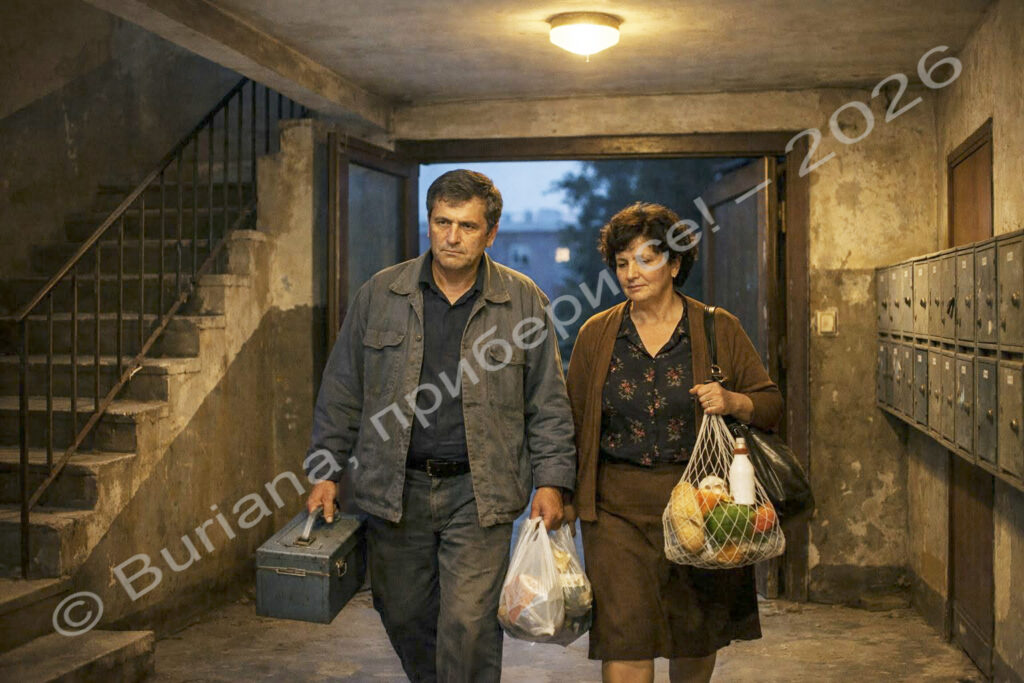
The BB child comes home from school alone, stays with grandmother alone, gets used to the rules alone.
When he becomes a parent of X, it seems logical to him: “You are already big, manage on your own.”
The key around the neck, warming the soup alone, organizing the day alone become standard. X “learns” to manage alone, but the price is inner loneliness.
Later, as a parent of Z, this X carries the feeling: “Everyone manages on their own, that is life.”
And it is difficult for him to see how far the child really can manage alone and where he needs presence and boundaries. From the outside it looks like trust and freedom, but on the inside it is often that same old loneliness, only this time in the company of a smartphone.
4. “The big world decides, I only adjust”
For baby boomers, “the big one” is the party, the state, the boss. Deep inside them lives the feeling:
“The rules come from somewhere, I have to comply, I have no say.”
They may joke, “slip between the raindrops,” but they rarely believe they can actually change the system. When this person becomes a parent of X, the messages sound like this:
“The boss is always right.”
“Do not push yourself forward too much, so you do not bring trouble on yourself.”
When X and Y become parents of Z, “The Big One” simply changes its name – now it is called “technologies,” “algorithms,” “that is how the world is”:
“All children are on their phones.”
“There is no way to stop it, that is how it is now.”
And inside it is the same VBS:
“I do not determine the rules, I only follow them.”
The parent feels powerless to set his own boundaries at home, to create his own rhythm, different from the mass one. And he leaves the child in the hands of the new “big world,” this time online.
BB as Parents of X: Love Through Labor and Silence
Generation X inherits several key messages from their parents:
“The world is not safe, so we will keep you tight, so you are always ready”
This shapes X as resilient, hardworking, often hyper-responsible people, but internally tense.
“Do not embarrass yourself.”
External behavior is more important than inner experience. X learns to control his face, not to cry and to behave “as one should,” even when it is hard for him.
“Love is in care, not in words.”
X understands that to be loved means there is bread, electricity and textbooks, not necessarily hugs and conversations.
Many from X enter parenthood with two extremes: either they repeat the BB model, which is tight, demanding, oriented toward success and propriety, or they try to do “exactly the opposite” – not to forbid, to provide everything, not to refuse, so as not to repeat their heavy childhood.
In both cases the root is one and the same – the unspoken promise of the baby-boomer parent: “I want you to live better than I managed to.”
The Lonely Children’s Room Then and the Digital Loneliness Now
The fact that Generation X was left on its own is part of the general generational background.
Back then the X child is alone at home with a key around his neck, textbooks, radio or television, which do not ask him how he is.
Now the Z child is alone in the room, with a phone and the internet, which flood him with information, but also do not ask him how he is.
With BB, the absence is because of a lack of something: small salaries, a heavy regime, a real need to work constantly so that there is enough. With X and Y, the lack is different. There are more goods, but the VBS in the conscious mind and the subconscious are the same:
“Care means that I provide.”
“Feelings burden others.”
“Everyone manages on their own.”
“The big world decides.”
So today the parent–child connection is broken not because of an empty refrigerator, but because of an empty inner space that has not been taught to stay in contact.
BB as Grandmothers and Grandfathers of Z: Resource and Risk
Today the baby boomers watch their Z grandchildren from the sofa, from the village, from the little garden in front of the block.
In some families they are the strict commentator: “These children are always on their phones.” or “Today’s children do not know what real work is.”
In others, they become a refuge. They are the place where there is soup, banitsa and stories about “the old days,” without looking at the beloved grandchild’s report card.
The resource is that BB can give Z a sense of root, of a family “we lived through hard times and survived,” they can pass on resilience, the meaning of labor, the ability “to make something out of nothing.”
And the risk is that if the VBS remain unconscious, the same people can undermine Z’s confidence with phrases like: “This thing of yours is not work,” “The world is going downhill, you understand nothing.”
When BB manage to see their own path without self-blame and without idealizing, their role can change from a strict judge to a quiet but stable pillar.
If you listen to how an average baby boomer speaks with his Z grandchild, you can hear something like this:
– Grandpa, how did you live without the internet?
– Normally. There were queues, which were our social networks.
After that come stories about waiting for bananas, about “signing up” for a washing machine, TV or living-room furniture set, and about the time “when there was nothing, and we still managed.”
Z first laughs, then is slightly horrified, and in the end, between two funny details, hears something important: that these people really did wait – not only for goods, but for change.
Humor here is not decoration, but the translator between two worlds – between a person who lived in endless queues and a person who receives everything with delivery to the door.
What We Can Do with This Inherited Code
If we look at VBS not as a sentence, but as an inherited code, the task of Generation X and Y is not to blame BB, but to decode the message.
The baby boomer’s code may sound like this:
“We worked, kept silent and gritted our teeth so that you could exist. You can now live in a different way. If you continue only to run and keep silent, everything we endured will remain in vain.”
From here on, the task for X, Y and Z becomes clearer.
To transform care from “providing” into presence and conversation. To break the line “feelings burden others” and to teach both themselves and their children to express them. To change the scenario “everyone manages on their own” into “we can go through the difficult together.” To regain the feeling that they have the right to create their own rules at home, not only to adjust to the “big world,” whether that world is the state or the internet.
A Small Practical Gesture
If you are from this generation or you are the child of such a person, you can do something very simple.
Remember one situation from childhood in which the baby-boomer parent was hard, strict or silent.
Place your hand where the body reacts: stomach, chest, throat.
Name out loud one VBS that you feel has remained. For example:
– “If I am not perfect, I will disappoint everyone.”
– “It is not safe to say what I feel.”
– “I have to manage on my own, there is no one I can rely on.”
Tell yourself: “This belief was necessary for my parents in order to survive, but it no longer serves me in the same way.”
Inhale and choose one small different behavior for today. For example, to say something calmly that you usually keep silent, to ask for help, to allow yourself a small joy without guilt.
This is a gesture toward yourself and toward the line before you.
The baby boomers are not a “past generation.” They are a living memory of a world in which security was paid for with freedom, and love – with silence and labor.
From them come both the wounds of X and part of the anxieties of Z. From them also come the resources – resilience, a sense of duty, the ability to endure in a crisis.
When we begin to see both sides – the weight and the strength – the story of this generation stops being only a chronicle of deprivation. It becomes a map by which we can understand ourselves more deeply and give the next generations not only memories, but also a lighter path forward.
If you encounter words in color in the text — they are links to additional materials on the site related to similar topics.
“Quest to Self” – Q2S is an author’s method for inner transformation. It is not about an “artistic path,” but about a system with a clear structure, verifiable steps and practical actions that lead to lasting change, not temporary inspiration. Through Q2S a person releases blocked energy and accumulated inner reactions in the subconscious, restores their nervous system and begins to create their reality consciously. If this touches you, you can explore how the process works in the section “Quest to Self – Q2S.”