
Do you know that feeling that something inside you is waiting to be noticed, simply to be seen?
“I just can’t, something happened to me. I cooked all evening, prepared everything, and he just said ‘thanks’ and sat down to watch the game. Not another word. Not ‘what a great dinner,’ not ‘thank you for taking care of this’… Do you know how I felt?”
A friend said this while turning her fork around in her salad and smiling sourly.
We all know it — that slight sting when someone does not recognize what has been put in. Without saying it out loud, inwardly we whisper: “But I only wanted to feel valuable.”
Have you ever found yourself (or perhaps often find yourself) in a situation like this:
“I gave up. I helped her with the project three times, edited her text, explained what to say at the interview, and in the end… nothing. No call, no message, not even a ‘thank you.’”
I sat there wondering why I was angry. After all, “I don’t do it for praise.” And yet, somewhere deep down, something stung. Maybe because of the effort, but most of all because she did not see me.
She did not recognize that I had been important and that I had mattered.
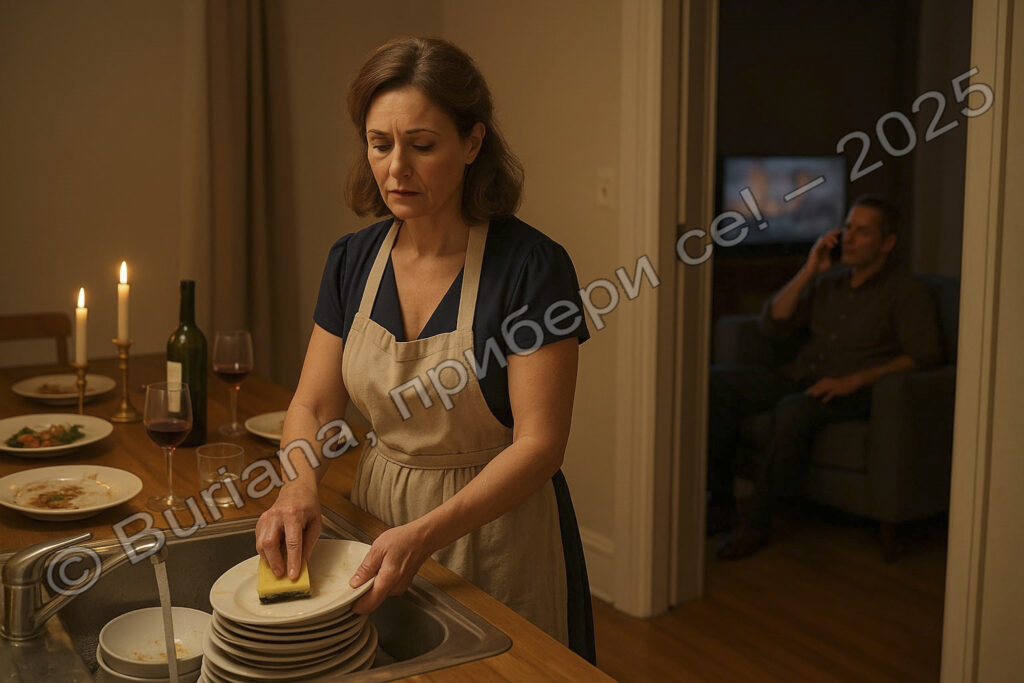
To be valuable — this is not simply to be good at something. It is not even to be loved.
It is the quiet inner feeling that your presence has meaning. That when you are there, someone feels it, and that without you something would be missing. It would be missing because you are truly woven into the other person’s life.
The need to be valuable often does not come with big words. It is in the everyday actions — in the effort, in the sacrifice, in the readiness to always help, to take on, to be present, to carry. It shows itself in the silence when there is no gratitude on the other side, and in the pain we feel but do not know how to name.
Value, as we experience it, is rarely a stable inner foundation. More often, we look for it as a mirror image in the eyes of others.
“Did I do well?”
“Were they pleased?”
“Did they understand that I gave everything?”
“Did they feel that I cared?”
And if the answer does not come, the feeling of being “unseen” clutches at the chest like resentment, sometimes like exhaustion, sometimes like indignation and anger. And sometimes simply like a question:
“Am I worth anything if no one saw it?”
In reality, we activate the familiar pattern of becoming Saviors, of giving even more, of not asking out loud but inwardly waiting for people to figure it out on their own, of believing that if we are useful, if we are good, if we are self-sacrificing, the moment of recognition will come.
And this is exactly where those Inner Blocking Structures — IBS — begin to “run wild,” turning the need for value into a way of life:
- Traumas from a lack of attention, of parental validation, of genuine response
Example:
Traumatic memory: “I was rejected when I showed myself as I truly am.”
Deep down there is an experience in which the child was ignored, shamed, or punished when they expressed an authentic desire, emotion, or opinion.
That is why later, “to be valuable” means: to be what the other person wants — so that I will not be rejected again.
- Ancestral codes in which the “good person” always gives themselves completely without asking for anything in return
Example: Program (PR): “A good person always thinks of others first.”
Inherited through generations, this program makes self-care look selfish. Value is measured through usefulness to others, and every personal boundary is experienced as guilt.
- Beliefs that personal worth depends on how much we give and who needs us
Example: Belief (BL): “Only when I give do I have the right to be loved.”
This is an unconscious inner condition that blocks the feeling of unconditional worth. If I do not give — I am not worth anything. If I do not help — I am unnecessary.
- An inner prohibition against seeing ourselves as important to ourselves — without waiting for confirmation from outside
Example: Conviction (C): “If I am not needed, I will be left alone.”
At first glance it sounds logical, but it encodes the fear that our worth is a condition for being present in another person’s life. This belief often makes a person accept disadvantageous relationships, “keep” people through care, give themselves away in order to remain “in the game.”
Some of these structures are old, from past incarnations; some are personal, others ancestral, and others collective. But all of them lead us to move away from ourselves in order to receive a reflection from others. To forget value as an inner experience and turn it into dependency.
This is how we live in a “battle for value.”
“But I am not hungry for recognition!”
“Yes, but you are not sure that you are worth anything when you are alone. Because someone once taught you that value is earned, not experienced. That you have to deserve to be.”
“When I began to love myself…” when I began to see myself — truly and gently — things changed.
We no longer give in order to be worth something; we give because we are worth something. That is enough.
Sometimes a person understands that they are valuable not when someone tells them, but when they stop waiting for it.
P.S. This text is not simply information, but a path lived through. I believe that personal truth cannot be copied, so if you feel like sharing it, let it be with soul and source. Thank you!